
The Complete Guide
to Measuring Indoor Humidity

Tuesday 3rd March
How to Check Indoor Humidity in Your Home
You can’t see indoor humidity — but you can definitely feel its effects.
If your windows stream with condensation every morning, your bedroom smells slightly musty, or you’re constantly dealing with dry skin and static shocks in winter, the problem may not be your heating. It could be your humidity levels.
In the UK especially, where damp weather, insulation upgrades and closed windows are common for much of the year, indoor moisture can quietly build up without us noticing. Left unchecked, it can lead to mould growth, damage to walls and furniture, and even respiratory issues. On the other hand, air that’s too dry can make your home uncomfortable and aggravate allergies and asthma.
The tricky part? Most homeowners and renters don’t actually know what their indoor humidity level is — or what it should be.
That’s where this guide comes in.
In this complete UK guide, you’ll learn:
- What indoor humidity actually means
- The ideal humidity range for British homes
- The simplest way to measure it accurately
- How to tell if your home is too damp or too dry
- Practical steps to fix humidity problems quickly
Let’s start with the basics.
What Is Indoor Humidity?
Indoor humidity refers to the amount of moisture present in the air inside your home. It’s measured as relative humidity (RH), expressed as a percentage.
Relative humidity tells you how much moisture the air is holding compared to the maximum it could hold at that temperature.
For example:
- 30% RH = fairly dry air
- 50% RH = comfortable moisture level
- 70% RH = high moisture, increased condensation risk
Cold air holds less moisture than warm air. That’s why condensation is more common in winter: warm, moisture-laden indoor air hits cold windows or walls and turns back into water droplets.
Understanding this simple relationship explains most household damp problems.
What Is the Ideal Indoor Humidity Level in the UK?
For most UK homes, the ideal indoor humidity level is:
✅ 40–60% relative humidity (RH)
Here’s why this range works best:
- Below 40% → air feels dry, can irritate skin and airways
- 40–50% → optimal comfort and sleep quality
- 50–60% → still safe, but monitor carefully
- Above 60% → increased risk of condensation and mould
In older UK properties with solid walls, levels often climb above 60% during winter. In newer, well-insulated homes, moisture can build up because there’s less natural ventilation.
This is why measuring is so important — guessing isn’t reliable.
The Most Accurate Way to Check Indoor Humidity: Use a Hygrometer


If you want an accurate reading, you need a hygrometer.
What Is a Hygrometer?
A hygrometer is a small device that measures relative humidity (RH) — the percentage of moisture in the air compared to the maximum amount the air can hold at a given temperature.
In simple terms, it tells you whether your indoor air is too damp, too dry, or comfortably balanced.
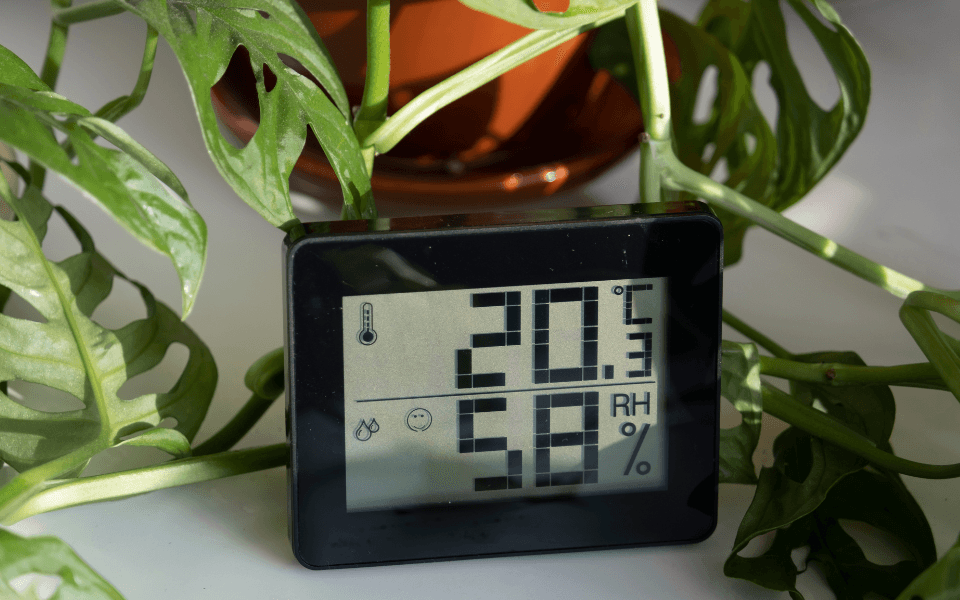
Most modern hygrometers also display room temperature, which is important because temperature and humidity work together. Warm air can hold more moisture than cold air, which is why condensation tends to form when warm, humid air meets cold surfaces like windows or external walls. Seeing both readings side by side helps you understand why condensation might be appearing — not just that it is.
Good-quality hygrometers are designed to give readings within a few percentage points of accuracy. While that might not sound significant, even a 5–10% difference in humidity can determine whether mould growth becomes likely.
They’re affordable, simple to set up, and require very little maintenance, usually just an occasional battery change. For most UK households, a basic digital hygrometer is more than sufficient to monitor everyday indoor conditions and catch moisture problems early.
Digital hygrometers
Clear display, reliable, and easy to use. Ideal for most households. They provide quick, easy-to-read percentage values and often include comfort indicators (such as “dry”, “comfort”, or “humid”) to help you interpret the numbers at a glance. Most models are battery-powered and require minimal setup.
Analogue hygrometers
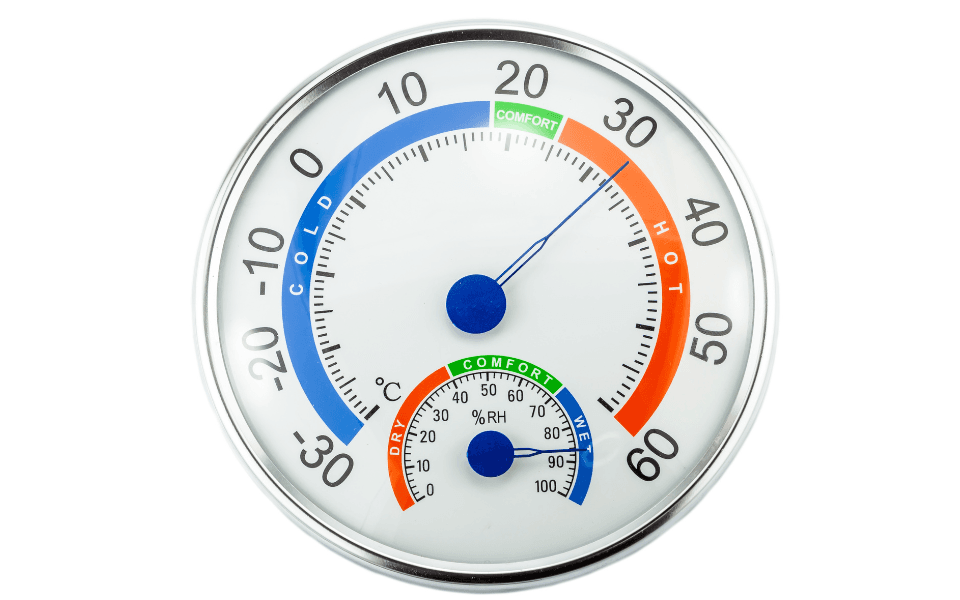
Classic dial design. Affordable, but may require calibration. These use a mechanical sensor (often a coiled material that reacts to moisture in the air) to move a needle on a dial. While slightly less precise than digital versions, they’re simple, don’t require batteries, and can work well in living rooms or conservatories.
Thermometer–hygrometer combinations
Perfect for bedrooms, nurseries or home offices. By showing temperature and humidity together, they give a fuller picture of indoor comfort. This makes it easier to understand issues like condensation risk, overheating, or dry air affecting sleep quality.
Smart humidity sensors
Connect to apps, track trends over time, and send alerts when humidity rises above safe levels. These are particularly useful in properties prone to damp, as they allow you to monitor changes remotely and spot patterns — such as spikes after cooking, showering or during cold weather. Some models can even integrate with smart heating or ventilation systems.
Where to Place It (So Your Readings Are Actually Accurate)
Buying a hygrometer is only half the job — placing it correctly is what makes the numbers meaningful.
Humidity can vary surprisingly within the same room. A device placed too close to a heat source or a cold surface can give misleading readings, making you think your home is drier (or damper) than it really is.
Follow these simple placement rules:
📏 1. Keep It at Breathing Height
Position your hygrometer around 1–1.5 metres from the floor.
This reflects the air you’re actually living and sleeping in — not the cooler air near the floor or warmer air near the ceiling.
🔥 2. Keep It Away from Direct Heat
Avoid placing it near:
- Radiators
- Fireplaces
- Heaters
- Sunny windowsills
Direct heat can artificially lower the humidity reading and distort results.
🪟 3. Don’t Put It Right Next to Windows
External walls and windows are often colder than the rest of the room. This can create misleading readings, especially in winter.
💨 4. Avoid Steam & Short-Term Moisture Sources
Keep it away from:
- Kettles
- Cookers
- Showers
- Drying laundry
Steam causes temporary spikes that don’t reflect the overall humidity level of the room.
✔ Pro Tip
Place your hygrometer on a shelf or table in a central, well-ventilated part of the room, then leave it undisturbed for a few hours before relying on the reading.
For the clearest picture, measure humidity in multiple rooms — especially bedrooms, living areas, and any spaces prone to condensation or damp. Moisture levels often vary throughout the home, so one reading rarely tells the whole story.
This is where nuance matters. Landlord responsibility largely depends on the cause of the mould.
Signs Your Home Has High Humidity
High humidity often creeps up gradually. Watch for:
- Condensation on windows each morning
- Black mould spots on ceilings or corners
- Peeling paint or bubbling wallpaper
- Musty odours
- Damp patches on walls
- Increased allergy symptoms
In the UK climate, high humidity is especially common in winter and during extended rainy periods.
If ignored, it can lead to structural damage, damaged furnishings, and costly mould remediation.
What to Do If Humidity Is Too High
If readings consistently exceed 60%, act early.
Improve Ventilation
- Use extractor fans in kitchens and bathrooms
- Open windows briefly each day
- Keep trickle vents open
Manage Moisture Sources
- Avoid drying clothes indoors without ventilation
- Keep saucepan lids on while cooking
- Wipe down shower surfaces
Use a Dehumidifier
A dehumidifier removes excess moisture from the air and can dramatically reduce condensation. It’s especially helpful in:
- Flats
- Basements
- Older UK homes
- Rooms with limited airflow
Signs Your Home Has Low Humidity
While less common, low humidity usually appears in winter when central heating dries out the air.
You may notice:
- Dry or itchy skin
- Chapped lips
- Static electricity shocks
- Sore throat in the morning
- Cracked wooden furniture or flooring
If your reading is below 40%, it may be time to gently increase moisture levels.
What to Do If Humidity Is Too Low
If your home feels dry and readings fall below 40%:
Use a Humidifier
Particularly helpful in bedrooms overnight.
Add Houseplants
Plants release moisture naturally and improve air quality.
Introduce Gentle Moisture
Drying laundry indoors (carefully) or placing bowls of water near radiators can increase humidity slightly.
Frequently Asked Questions
Is 70% Humidity Too High Indoors?
Yes. Sustained levels above 70% significantly increase mould risk. At this level, condensation is more likely to form on cold surfaces like windows and external walls, creating ideal conditions for mould growth.
What Humidity Causes Mould?
Mould can begin forming when humidity consistently exceeds 60%, especially on colder surfaces. Occasional spikes aren’t usually a problem, but prolonged high humidity allows moisture to build up and spores to grow.
Does Opening Windows Reduce Humidity in Winter?
Yes — short bursts of ventilation (5–10 minutes) can effectively remove moist indoor air and replace it with drier outdoor air. This helps reduce condensation without overly cooling the room.
What Is the Ideal Humidity Level for Bedrooms?
Aim for 40–50% in bedrooms. This supports comfortable breathing, reduces overnight condensation, and lowers the risk of mould forming behind beds or wardrobes.

Final thoughts
Checking indoor humidity is one of the simplest steps you can take to protect your home and improve everyday comfort.
For most UK homes, maintaining 40–60% relative humidity helps:
- Reduce condensation on windows and walls
- Lower the risk of mould growth
- Protect paintwork, plaster and furniture
- Improve overall indoor air quality
The key is consistency. Humidity levels change with the seasons, your heating habits, and everyday activities like cooking or showering. By monitoring regularly — especially during winter — you can spot problems early and take action before they become costly.
A small hygrometer costing under £20 can provide ongoing peace of mind and help you make informed decisions about ventilation, heating and moisture control.
Once you start measuring your indoor humidity, you’re no longer guessing — you’re managing your home proactively.
Categories
Top Posts
-
Essential Tools for Electricians19 Jul 2024 How To Guides
-
FLUKE BAFGAFF Special Offer18 Feb 2025 Promotions & Deals
-
10 Essential Electrical Test Instruments on a Budget09 Feb 2026 Buying Guides
-
Gas Engineers' Guide: Choosing the Right Flue Gas Analyser28 Oct 2025 Buying Guides
-
What You Need in Your EV Charger Installation Kit21 Apr 2026 Buying Guides
Upcoming Events
More events to be announced…
Newsletter
Sign up to our newsletter for exclusive news, offers, and discounts