
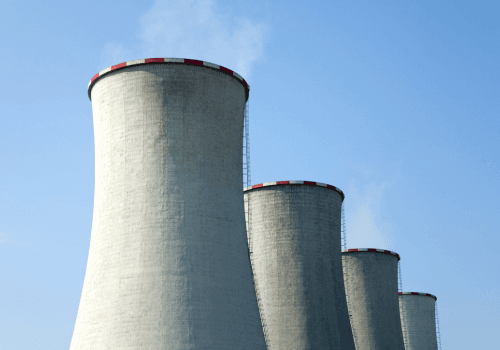
Cooling towers are recognised as one of the highest-risk sources because they produce fine airborne water droplets that can travel considerable distances. They require robust maintenance programmes, water treatment and routine monitoring.
Legionnaires’ Disease: Causes, Symptoms, Prevention and the Best Legionella Testing Kits
A Complete Guide to Legionnaires’
Disease and Legionella Testing Kits

Monday 13th July 2026
Legionnaires' Disease: Causes, Symptoms, Prevention and the Best Legionella Testing Kits
Legionnaires' disease is a serious form of pneumonia caused by Legionella bacteria. Although relatively uncommon, it can lead to severe illness, particularly in older adults, smokers and people with underlying health conditions. Fortunately, the disease is largely preventable through proper water system management, regular temperature monitoring and routine maintenance.
Whether you’re responsible for a commercial property, healthcare facility, hotel, school or rental accommodation, understanding how Legionella develops—and how to prevent it—is essential for protecting building occupants and complying with UK health and safety guidance.
What is Legionnaires’ disease?
Legionnaires’ disease is a lung infection caused by inhaling tiny airborne water droplets contaminated with Legionella bacteria. It was first identified following an outbreak at an American Legion convention in 1976, giving the disease its name.
Unlike many bacterial infections, Legionnaires’ disease cannot normally be passed from person to person. Instead, infection occurs when contaminated water droplets are breathed into the lungs.


What causes it?
The illness is caused by Legionella bacteria, most commonly Legionella pneumophila. These bacteria occur naturally in rivers, lakes and reservoirs but become a health risk when they multiply within artificial water systems.
Conditions that encourage Legionella growth include:
- Water temperatures between 20°C and 45°C
- Stagnant or infrequently used water
- Limescale and sediment
- Biofilm inside pipework
- Poorly maintained water systems
If contaminated water becomes aerosolised through showers, taps or cooling systems, the bacteria can be inhaled by anyone nearby.
How does it spread?
People develop Legionnaires’ disease by breathing in contaminated water droplets or mist.
Common sources include:
- Cooling towers
- Hot and cold water systems
- Showers
- Decorative fountains
- Hot tubs and spas
- Misting systems
- Water storage tanks
Drinking contaminated water does not usually cause Legionnaires’ disease because the bacteria must enter the lungs rather than the digestive system.
Who is most at risk?
While anyone can become infected, the risk is significantly higher for:
- Adults aged over 50
- Smokers and former smokers
- People with chronic lung disease
- Individuals with weakened immune systems
- People with conditions such as diabetes or kidney disease
Healthy individuals are generally less likely to develop severe illness but should still avoid exposure to contaminated water systems.
Symptoms of Legionnaires’ disease
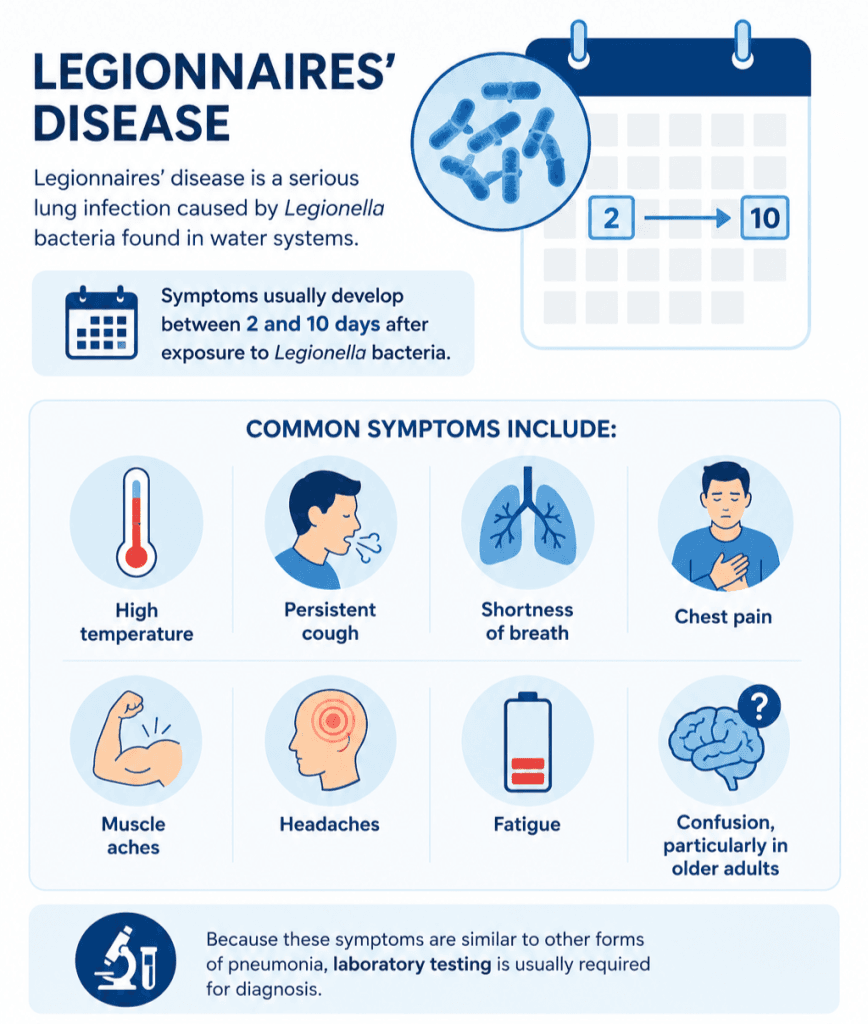
Symptoms usually develop between 2 and 10 days after exposure to Legionella bacteria.
Common symptoms include:
- High temperature
- Persistent cough
- Shortness of breath
- Chest pain
- Muscle aches
- Headaches
- Fatigue
- Confusion, particularly in older adults
Because these symptoms are similar to other forms of pneumonia, laboratory testing is usually required for diagnosis.
Legionnaires’ disease should always be treated promptly. If you develop symptoms after possible exposure to contaminated water systems, seek medical advice immediately.
For medical advice, diagnosis and treatment information, visit the NHS website.
Where does Legionella bacteria grow?
Legionella bacteria thrive in warm, stagnant water systems that are poorly maintained. Understanding where the bacteria are most likely to develop allows duty holders to implement effective control measures.
Water tanks
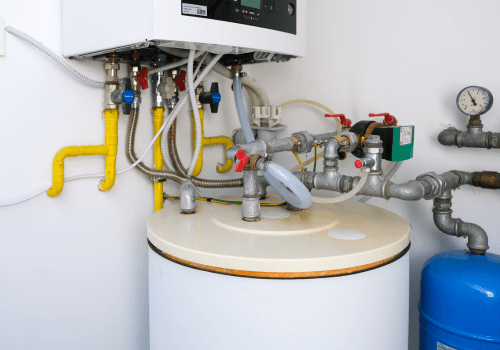
Stored water tanks can become breeding grounds if temperatures are not maintained correctly or if sediment accumulates over time. Regular inspections and cleaning help minimise this risk.
Cooling towers
Hot and cold water systems
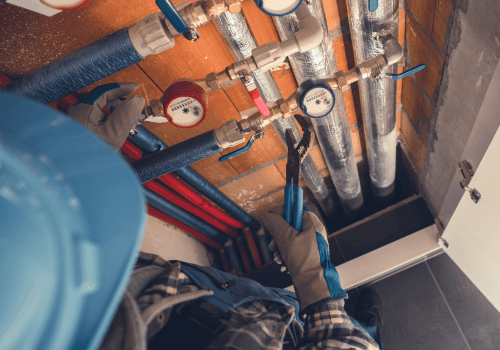
Commercial and domestic plumbing systems can support Legionella growth if water temperatures remain within the bacteria’s preferred range.
Effective management includes:
- Keeping hot water above recommended temperatures
- Keeping cold water below 20°C
- Removing dead legs in pipework
- Regularly flushing infrequently used outlets
Rental properties
Landlords also have responsibilities to assess and control Legionella risks.
Although domestic systems are generally lower risk, ensuring water systems remain clean, regularly used and correctly maintained is still an important part of responsible property management.

Commercial buildings

Hotels, offices, schools, hospitals, leisure centres and industrial premises often have complex water systems that require ongoing monitoring.
Duty holders should carry out Legionella risk assessments and maintain written control schemes where appropriate.
How to prevent Legionnaires’ disease
Preventing Legionnaires’ disease centres on stopping the bacteria from multiplying within water systems.
Carry out regular risk assessments
A Legionella risk assessment identifies areas where bacteria could develop and recommends suitable control measures.
Assessments should be reviewed regularly and whenever significant changes are made to a building’s water system.
Maintain correct water temperatures
Temperature control remains one of the most effective preventative measures.
As general guidance:
- Cold water should remain below 20°C
- Hot water should be stored above 60°C
- Hot water should reach outlets at approximately 50°C or above (while taking scald prevention into account)
Routine temperature monitoring confirms systems continue operating safely.
Flush infrequently used outlets
Unused outlets allow water to stagnate, creating favourable conditions for bacterial growth.
Regular flushing should include:
- Guest rooms
- Vacant rental properties
- Spare bathrooms
- Seasonal buildings
- Little-used taps and showers
Water testing
Water sampling can provide additional reassurance, particularly in higher-risk environments.
Routine testing helps:
- Verify existing control measures
- Detect bacterial presence early
- Support compliance documentation
- Guide maintenance decisions
Water testing should always complement good system management rather than replace it.

Ongoing monitoring
Legionella control is an ongoing process rather than a one-off exercise.
A good monitoring programme includes:
- Temperature checks
- Inspection of storage tanks
- Cleaning schedules
- Record keeping
- Corrective maintenance where required
Consistent monitoring allows issues to be identified before they develop into significant risks.
Choosing the right Legionella testing kit
Temperature monitoring is one of the most important aspects of Legionella control. Professional Legionella thermometer kits allow facilities managers, contractors and water hygiene specialists to quickly verify whether water systems remain within safe operating temperatures.
Whether carrying out routine compliance checks or completing a Legionella risk assessment, selecting the right equipment improves efficiency while helping maintain accurate records.
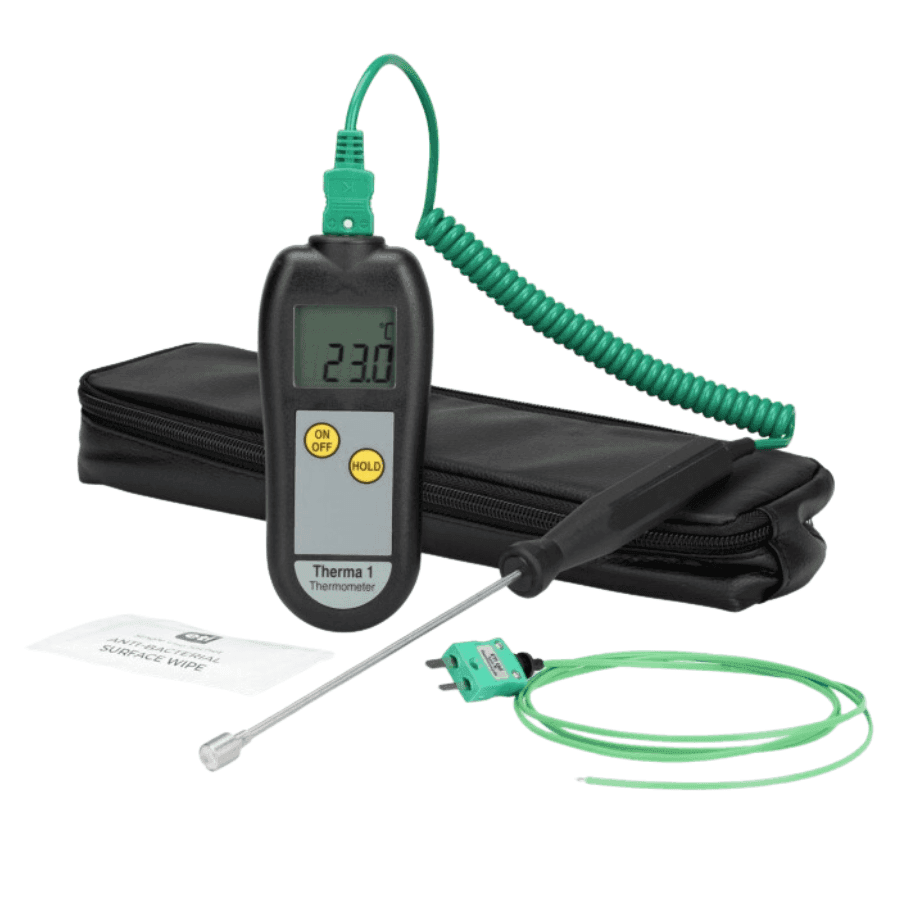
ETI 860-885 Standard Legionella Thermometer Kit
The ETI 860-885 Standard Legionella Thermometer Kit is designed for comprehensive water temperature monitoring.
The kit includes a Therma 1 thermometer together with a surface penetration probe, immersion probe and heavy-duty wire probe, enabling accurate measurements of standing water, pipework and water tanks. Its large LCD display, robust ABS housing and protective zip case make it ideal for regular inspections.
The inclusion of Biomaster antimicrobial protection and multiple probe options makes this kit well suited to organisations responsible for maintaining water hygiene and complying with HSE guidance.
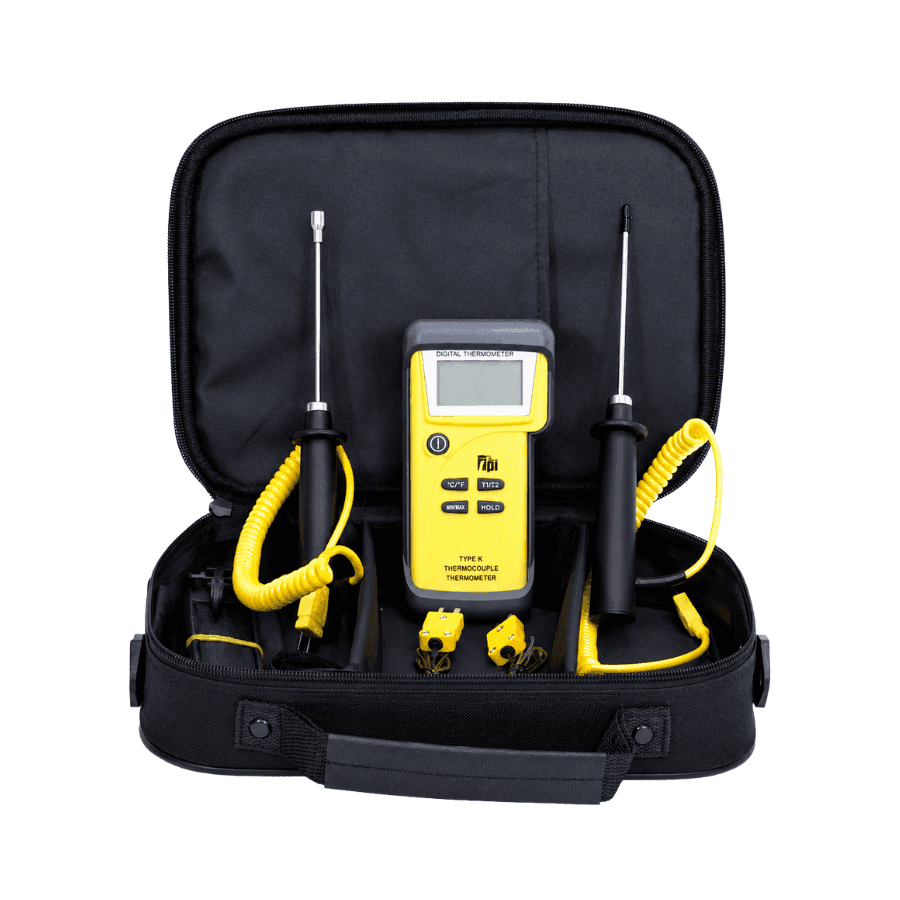
TPI 343 Legionnaires Temperature Kit 3
The TPI 343 Legionnaires Temperature Kit 3 offers a versatile solution for measuring water, pipe and air temperatures using one complete testing system.
Its dual-input thermometer displays readings from two probes simultaneously and calculates the temperature difference between them, allowing users to compare measurements with ease. The kit includes probes for liquids, pipe surfaces and air monitoring, making it suitable for comprehensive site inspections.
Features such as minimum and maximum recording, data hold and rapid field calibration help streamline routine Legionella monitoring.
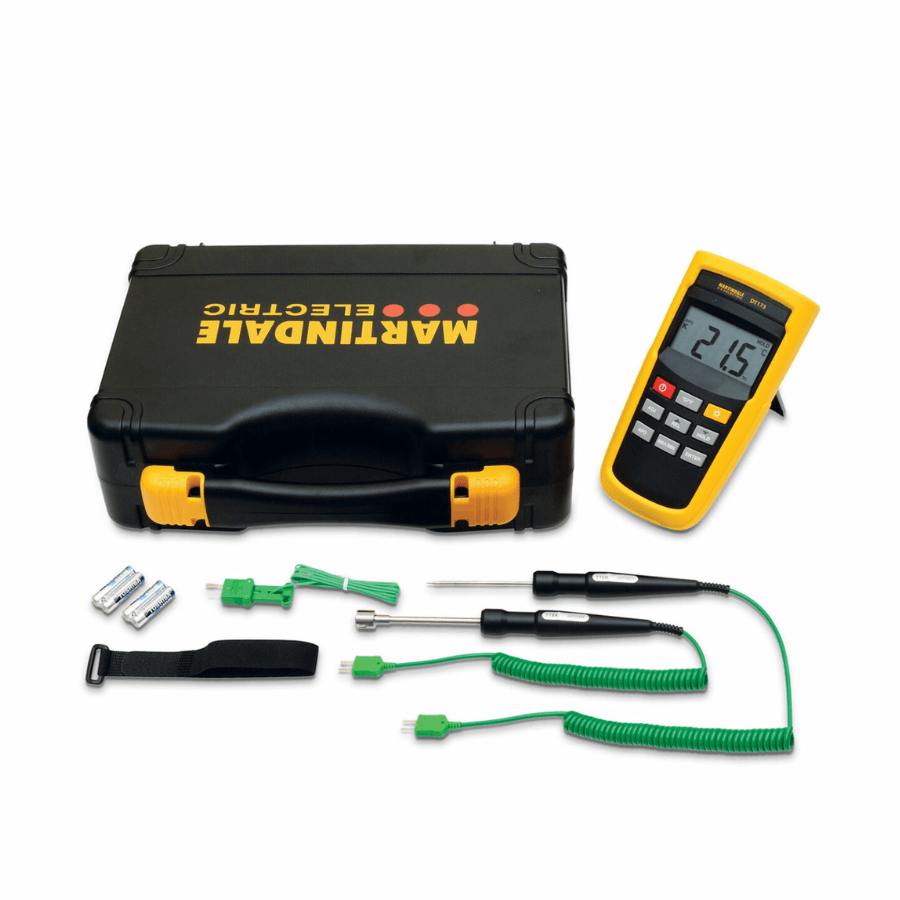
Martindale THERMOKITLGN Legionella Testing Thermometry Kit
The Martindale THERMOKITLGN Legionella Testing Thermometry Kit provides an all-in-one solution for professional temperature monitoring.
Built around the DT173 digital thermometer, the kit includes immersion, bead thermocouple and surface probes capable of accurately measuring temperatures across tanks, pipework and water systems. Its durable carry case, user-friendly controls and wide measurement range make it an excellent choice for contractors and facilities managers carrying out routine compliance inspections.
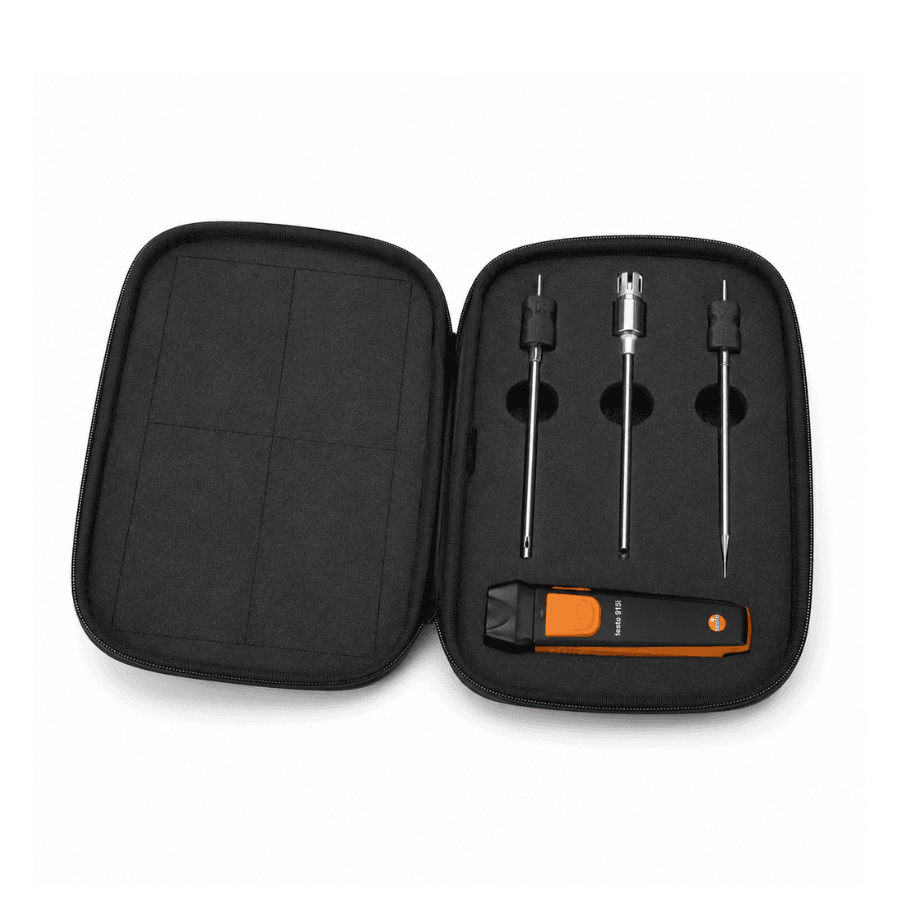
Testo 915i Smart Probe Legionella Kit
The Testo 915i Smart Probe Legionella Kit combines accurate temperature measurement with smart digital reporting.
Using Bluetooth connectivity, the thermometer links directly to the Testo Smart App, allowing readings to be viewed on smartphones or tablets while generating professional PDF or CSV reports. Three specialist probes cover air, surface and immersion measurements, providing flexibility across a wide range of water hygiene applications.
Its wireless operation and reporting capabilities make it particularly useful for larger commercial facilities.
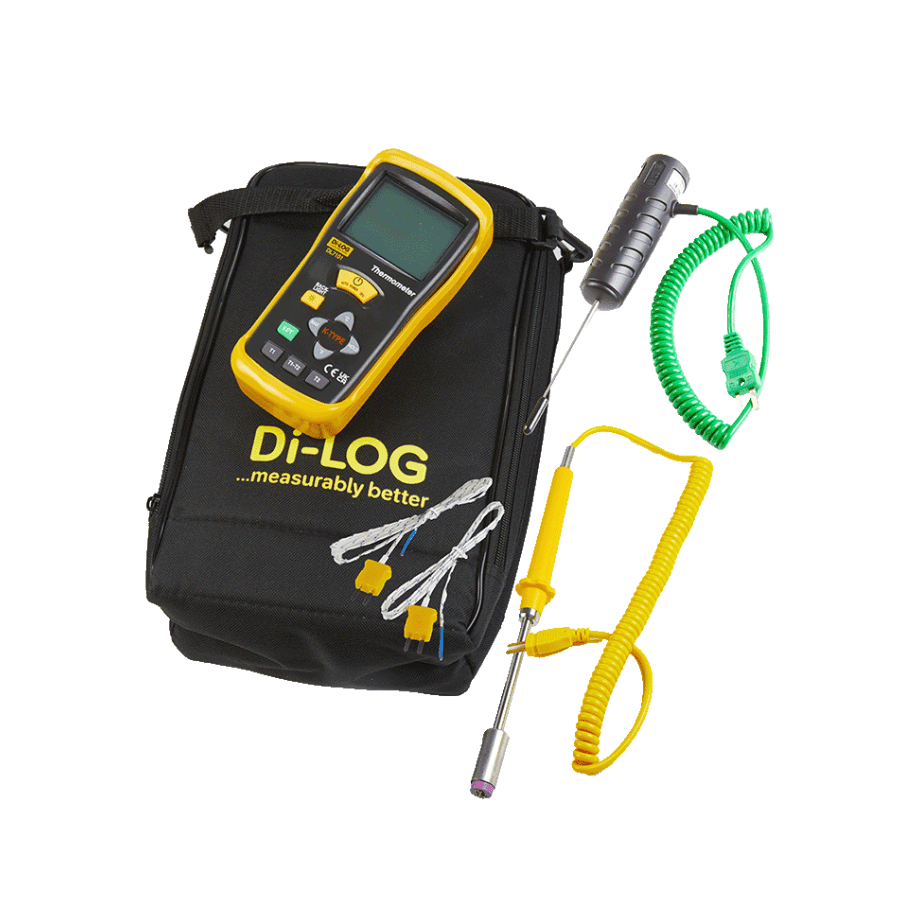
Di-Log DLLEG1 Legionella Testing Kit
The Di-Log DLLEG1 Legionella Testing Kit is designed specifically for routine hot and cold water temperature monitoring.
Featuring a dual-input thermometer with K-type probes, the kit enables users to monitor key compliance temperatures above 60°C for hot water systems and below 20°C for cold water systems. A backlit display, differential temperature measurement and rugged carry case make it particularly practical for engineers carrying out regular site visits.
Its straightforward operation makes it an excellent option for routine Legionella inspections.
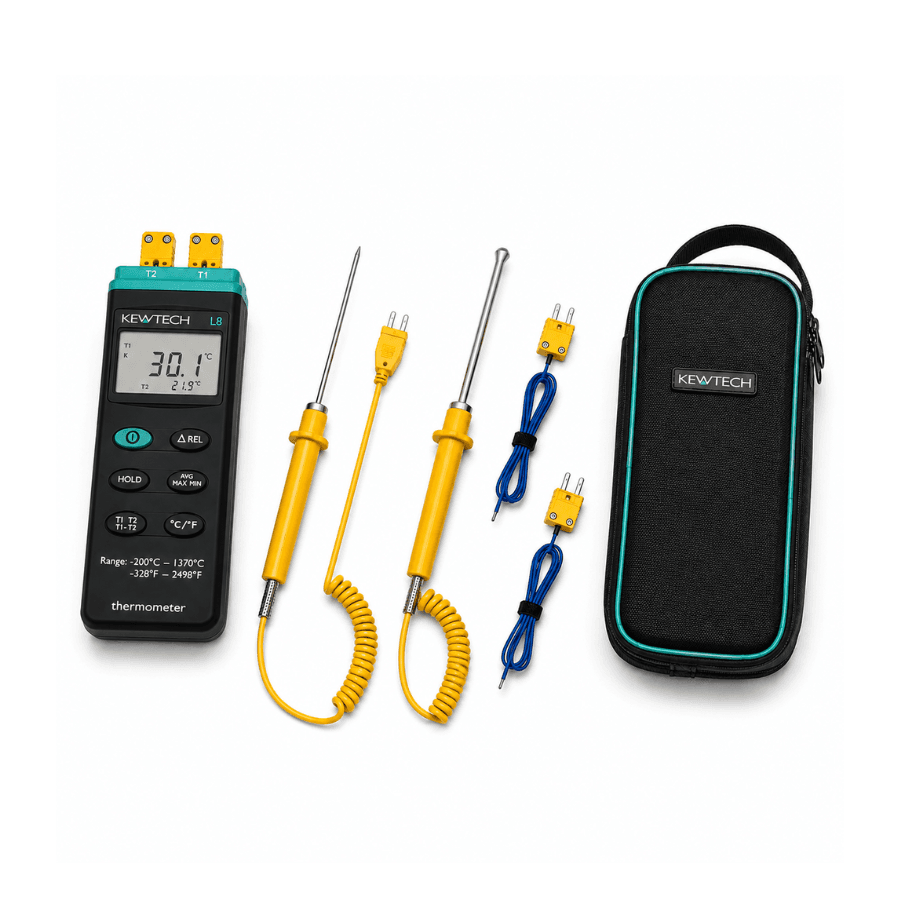
Kewtech L8 Legionella Thermometer Kit
The Kewtech L8 Legionella Thermometer Kit is designed for professionals who require reliable and accurate temperature monitoring across commercial water systems.
Supplied with the KEW301 dual-channel thermometer and specialist probes, the kit allows accurate measurement of both liquid and surface temperatures during routine inspections. The included EZY Kit Bag keeps equipment organised and protected between visits, making it particularly convenient for engineers working across multiple sites.
Choosing the right Legionella testing kit
Each kit offers slightly different advantages depending on your requirements:
| Legionella Testing Kit | Best Suited For |
|---|---|
| ETI 860-885 Standard Legionella Thermometer Kit | A comprehensive all-round kit with multiple probe options for routine temperature monitoring. |
| TPI 343 Legionnaires Temperature Kit 3 | Measuring water, pipe and air temperatures simultaneously during site inspections. |
| Martindale THERMOKITLGN Legionella Testing Thermometry Kit | Professional commercial compliance inspections and comprehensive water temperature monitoring. |
| Testo 915i Smart Probe Legionella Kit | Users who require Bluetooth connectivity, smartphone integration and digital reporting. |
| Di-Log DLLEG1 Legionella Testing Kit | Routine hot and cold water temperature monitoring with simple, practical operation. |
| Kewtech L8 Legionella Thermometer Kit | Engineers carrying out regular site inspections who need a well-organised, reliable testing kit. |
Frequently Asked Questions
Can you catch Legionnaires’ disease from drinking water?
Generally, no. Infection occurs by inhaling contaminated water droplets rather than by drinking contaminated water.
Is Legionella the same as Legionnaires’ disease?
No. Legionella refers to the bacteria, while Legionnaires’ disease is the lung infection caused by those bacteria.
How often should water be tested?
Testing frequency depends on the type of building, the complexity of the water system and the findings of the Legionella risk assessment. Higher-risk premises may require more frequent monitoring than low-risk environments.
Who is responsible for Legionella testing?
Responsibility typically lies with the duty holder responsible for the premises, such as employers, landlords, facilities managers or building owners. They are responsible for ensuring suitable risk assessments, monitoring programmes and control measures are in place.
Protect Your Water Systems with Proactive Legionella Monitoring
Legionnaires’ disease is largely preventable when water systems are managed correctly. Regular risk assessments, maintaining safe water temperatures, flushing infrequently used outlets and ongoing monitoring all play a vital role in reducing the risk of Legionella growth.
Using professional Legionella thermometer kits allows duty holders to carry out accurate temperature checks, support compliance with HSE guidance and identify potential problems before they become serious health risks. Whether you manage a single rental property or a large commercial facility, investing in the right testing equipment is an important step towards maintaining safe, compliant water systems for everyone who uses them.
Categories


Top Posts
-
Essential Tools for Electricians19 Jul 2024 How To Guides
-
10 Essential Electrical Test Instruments on a Budget09 Feb 2026 Buying Guides
-
How to Check Indoor Humidity in Your Home27 Feb 2026 Industry Insights
-
Choosing the Right Kewtech Multifunction Tester: KT64DL vs KT65DL vs KT66DL26 Jun 2025 Buying Guides
-
Gas Engineers' Guide: Choosing the Right Flue Gas Analyser28 Oct 2025 Buying Guides
Upcoming Events
More events to be announced…
Newsletter
Sign up to our newsletter for exclusive news, offers, and discounts