The Data Behind Better
Electrification Decisions
From Capacity to Compliance: Why Energy Monitoring Matters in School Electrification
Monday 5th October 2026
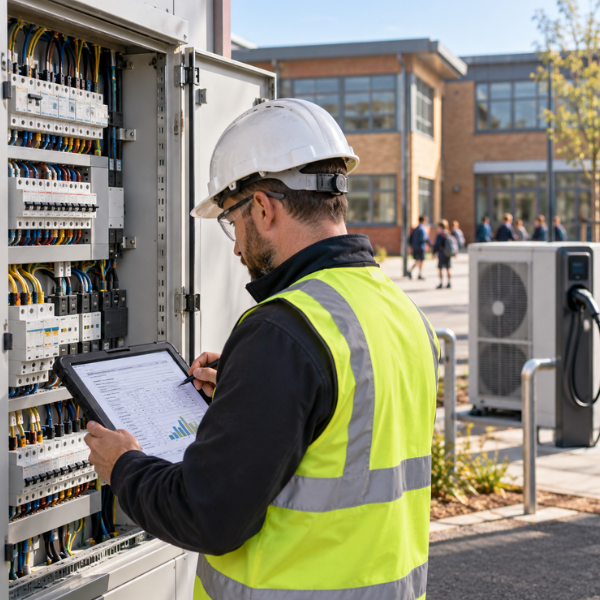
Building on an article published in the June edition of Energy Magazine, written by our partners at Chauvin Arnoux, we are taking a closer look at the role accurate energy monitoring can play in school electrification projects. Across the education sector, schools are under growing pressure to reduce carbon emissions, move away from fossil-fuel heating and make better use of renewable energy. For many sites, this means replacing oil- or gas-fired systems with electric heating, installing rooftop solar photovoltaic panels and, increasingly, accommodating electric vehicle charging.
However, electrification is not simply a matter of selecting new equipment and connecting it to the existing supply. Before a project moves forward, schools need a clear picture of how their electrical infrastructure is currently performing.
Is there enough spare capacity to support the additional load? Are the phases balanced? Do voltage levels remain within acceptable limits? Could solar generation or EV charging create operational problems?
These questions cannot be answered reliably through assumptions alone. They require measured data.
The challenge: moving from oil to electric
The original Chauvin Arnoux article followed a primary school that had secured government funding to replace its oil-fired heating with a fully electric system. The wider sustainability plan also included a proposed rooftop solar PV installation, intended to reduce both energy costs and carbon emissions.
Before proceeding, the school needed evidence that its existing electrical infrastructure could support the planned changes.
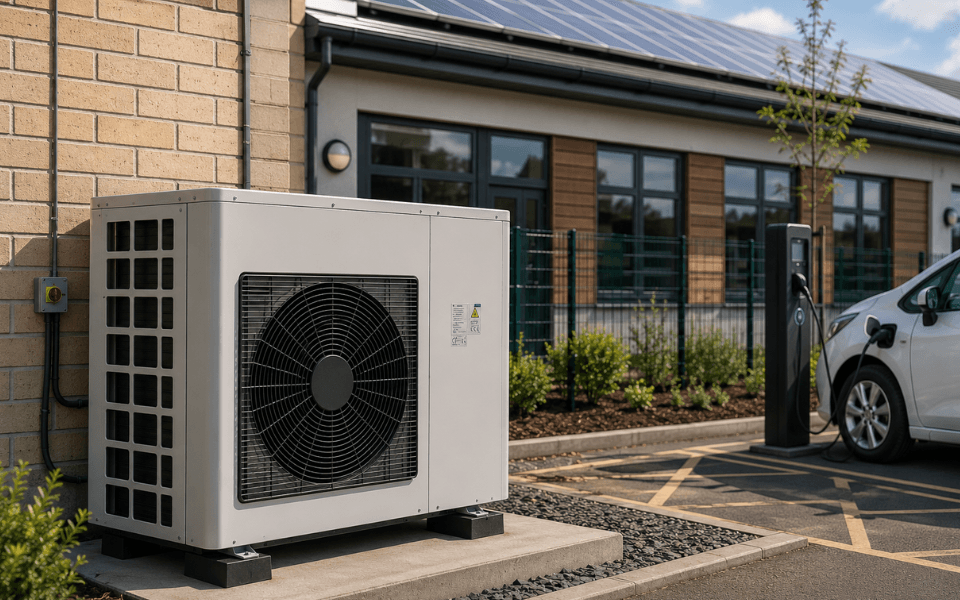
There were two principal concerns. The first was whether the main electrical supply had sufficient headroom to accommodate the additional heating load. The second was whether the introduction of solar PV could create overvoltage risks, particularly because EV chargers were already installed both on the site and in the surrounding area.
This distinction is important. A building may have sufficient current capacity for new electrical equipment while still experiencing voltage conditions that make certain technologies difficult or impractical to operate.
That is why a complete feasibility study should examine more than maximum demand.
Measuring actual building performance
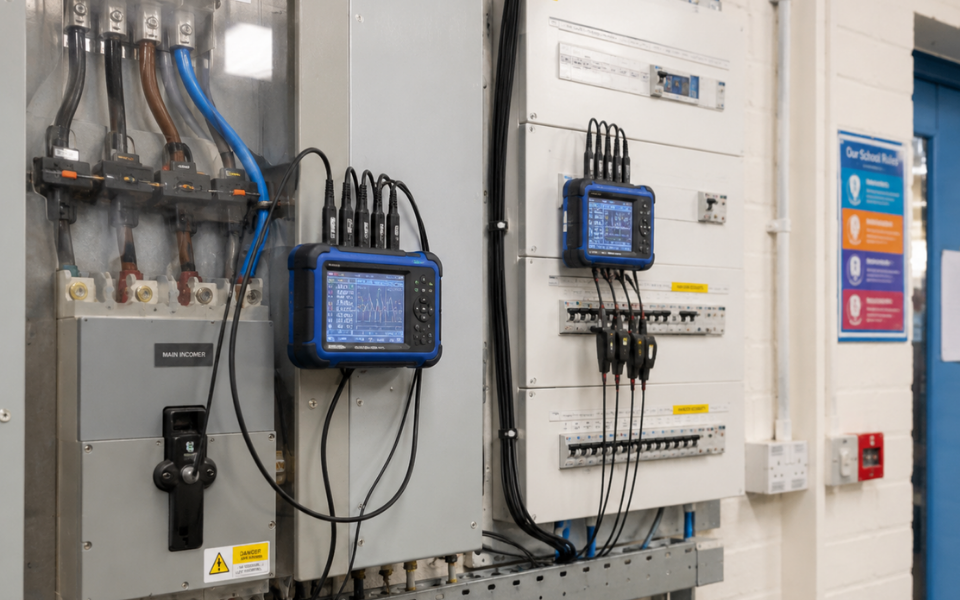
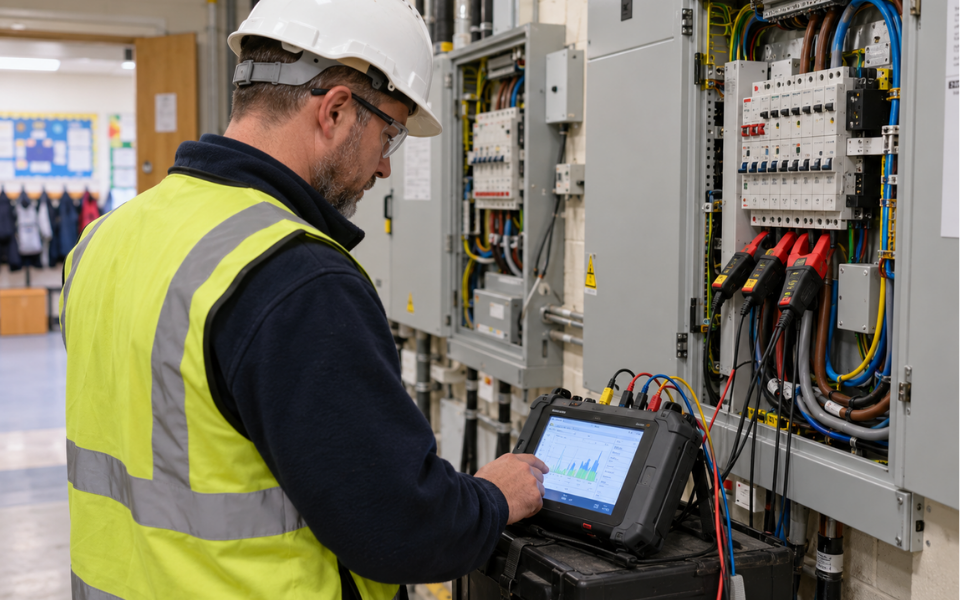
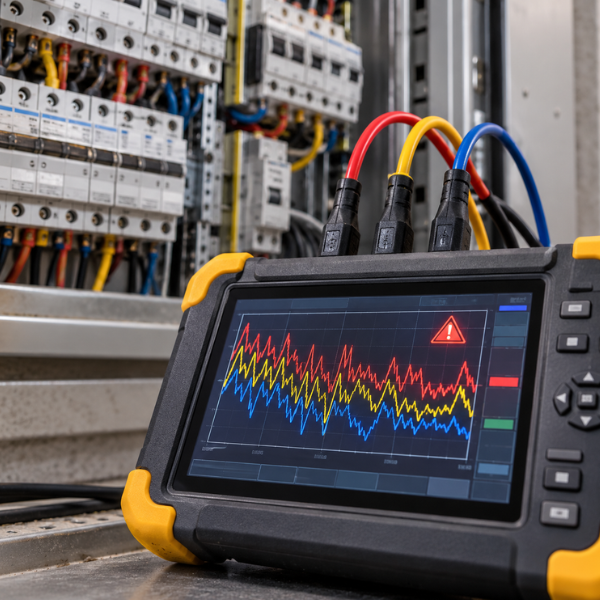
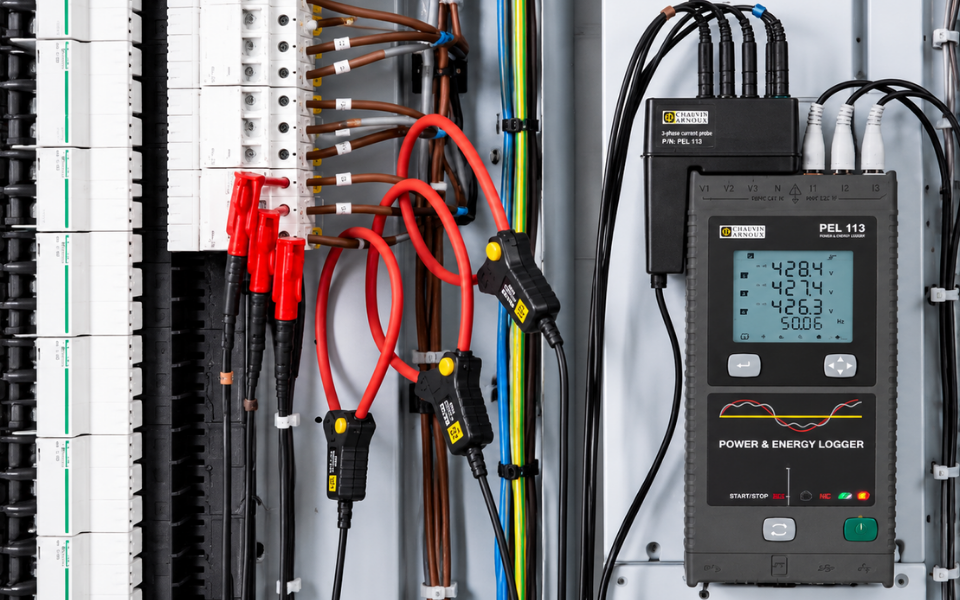
To understand the school’s existing electrical profile, two Chauvin Arnoux PEL113 power and energy loggers were installed at the main distribution board.
One logger was connected at the three-phase main incomer, while the other monitored a single-phase board. The equipment was used to record maximum demand and current consumption, check the balance between phases and closely observe voltage levels.
Monitoring was carried out over a representative school period. This meant the results captured normal variations in consumption associated with classroom activity, heating, cleaning and other everyday operations.
This approach provided a much more dependable basis for decision-making than a short site visit or a calculation based only on equipment ratings.
Electrical demand is rarely constant. Loads rise and fall throughout the day, and the operating pattern of a school can vary significantly between occupied and unoccupied periods. Monitoring over time allows the project team to identify genuine peaks rather than relying on estimates that may be either too cautious or overly optimistic.
Capacity was not the limiting factor
The single-phase distribution board was protected by a 60 A fuse. Monitoring recorded a maximum load of 37.55 A, demonstrating that there was sufficient spare capacity to support the proposed electric heater installation.
From a current-demand perspective, an upgrade was therefore not required.
The three-phase distribution board produced a similarly positive result. Protected by 100 A fuses per phase, it also demonstrated considerable spare capacity. The recorded data indicated that the proposed additional heating load could be accommodated without overloading the supply.
For the school, this was an encouraging finding. It meant that the transition from oil heating to electric heating could move forward with greater confidence.
It also illustrates the value of monitoring data in avoiding unnecessary work. Without reliable measurements, a project team might recommend a supply or distribution upgrade as a precaution. Such an upgrade could add cost, complexity and delay even where the existing infrastructure is already adequate.
By establishing actual maximum demand, the school could make a more informed investment decision.
Voltage revealed a different problem
Although the available current capacity was sufficient, the voltage results presented a more significant challenge.
At the single-phase board, the maximum recorded voltage was 255.5 V. This was above the stated statutory upper threshold of 253 V. The article explained that solar PV inverters and EV chargers are designed to shut down when voltage exceeds this level, placing both technologies at risk of disconnection under the existing network conditions.
The readings at the three-phase board reinforced the concern. Maximum voltages of 256.1 V, 256.9 V and 254.2 V were recorded across the three phases. All were above the 253 V upper limit referenced in the case study.
This had major implications for the proposed solar installation.
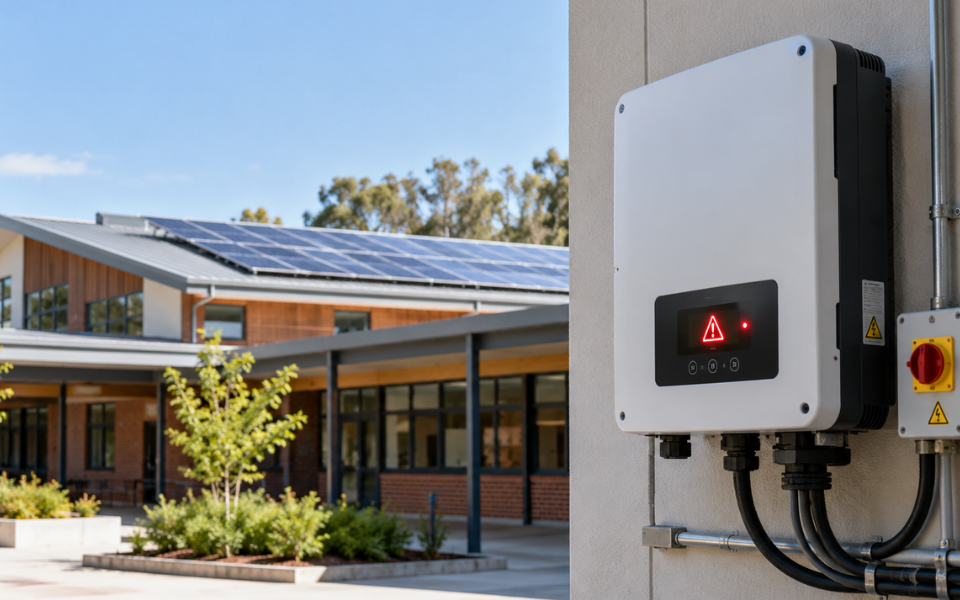
When a solar PV system exports electricity, the inverter may raise the local voltage. Where the incoming voltage is already high, additional generation can push it further beyond acceptable limits. The inverter may then disconnect to protect the equipment and the network.
The result could be a solar installation that repeatedly shuts down during periods of strong generation—precisely when it should be delivering its greatest benefit.
In this case, the monitoring evidence showed that installing solar PV without further intervention could lead to inverter shutdowns and make the system ineffective. The project would therefore require consultation with the Distribution Network Operator and potentially network reinforcement or other voltage-mitigation measures before proceeding.
Why early monitoring matters
The findings underline why monitoring should take place early in an electrification project.
Had the school assessed only maximum demand, the project might have appeared entirely straightforward. The distribution boards had sufficient headroom, and the additional heating load could be accommodated.
However, the voltage data revealed a separate network constraint that directly affected the feasibility of the proposed solar PV system.
Identifying this issue before installation gives the school and its advisers time to engage with the DNO, investigate potential remedies and revise the project programme where necessary. It also reduces the risk of investing in equipment that cannot operate reliably once connected.
Verify the electrical capacity available for new heating or charging loads.
Identify peaks in demand during representative operating conditions.
Check whether loads are distributed evenly between phases.
Detect high, low or unstable voltage conditions.
Support discussions with network operators and other stakeholders.
Separate building-level capacity issues from wider network constraints.
The objective is not simply to collect more data. It is to obtain the right evidence before significant design and procurement decisions are made.
Product highlight: PEL113 for maximum-demand studies
The same monitoring exercise also demonstrated the importance of observing voltage alongside current and demand.
The PEL113 loggers identified elevated voltage levels across both the single-phase and three-phase supplies. These readings changed the conclusion of the solar feasibility assessment and highlighted the need for DNO involvement before PV could be installed.
This is a useful reminder that electrical headroom alone does not provide a complete picture. For projects involving solar generation, batteries, EV charging or other network-connected technologies, voltage conditions can be just as important as available current capacity.
By capturing both aspects of system performance, the monitoring process helped the school distinguish between what could proceed immediately and what required further investigation.
Product highlight: PEL113 for voltage investigation
The same monitoring exercise also demonstrated the importance of observing voltage alongside current and demand. The PEL113 loggers identified elevated voltage levels across both the single-phase and three-phase supplies. These readings changed the conclusion of the solar feasibility assessment and highlighted the need for DNO involvement before PV could be installed.
This is a useful reminder that electrical headroom alone does not provide a complete picture. For projects involving solar generation, batteries, EV charging or other network-connected technologies, voltage conditions can be just as important as available current capacity.
By capturing both aspects of system performance, the monitoring process helped the school distinguish between what could proceed immediately and what required further investigation.
Making informed electrification decisions
The outcome of the project was not a simple yes or no. The school could proceed with its electric heating infrastructure because the recorded demand data showed sufficient spare capacity. The proposed solar PV system, however, would require further network assessment and potential mitigation because existing voltage levels were already above the stated limit.
That is exactly what a good feasibility study should deliver: not a predetermined answer, but an accurate understanding of the site.
As more schools electrify heating, transport and other services, detailed monitoring will become increasingly important. It enables decision-makers to plan upgrades with confidence, avoid unnecessary infrastructure costs and identify network constraints before they affect project performance.
The broader lesson from the Chauvin Arnoux case study is clear. In renewable-energy and electrification projects, the limiting factor may not be the proposed technology or even the building’s available capacity. Sometimes, it is the condition of the local electrical network.
Measuring first allows schools to move forward with evidence rather than assumptions—and to invest in solutions that are both technically viable and operationally dependable.
Successful electrification starts with understanding how a site performs today. By monitoring demand, voltage and network conditions before major investment decisions are made, schools can identify available capacity, uncover potential constraints and plan upgrades with greater confidence.
As this case study demonstrates, the answer is not always a simple yes or no. A site may have sufficient headroom for one element of a project while another, such as solar PV, requires further investigation or network intervention. Having reliable data from the outset helps project teams distinguish between these issues and respond appropriately.
With accurate monitoring in place, schools can reduce uncertainty, avoid unnecessary infrastructure costs and make better-informed decisions about future heating, renewable generation and wider electrification projects. Ultimately, measuring first provides a stronger foundation for solutions that are technically viable, compliant and dependable over the long term.
Categories
Top Posts
-
Essential Tools for Electricians19 Jul 2024 How To Guides
-
10 Essential Electrical Test Instruments on a Budget09 Feb 2026 Buying Guides
-
How to Check Indoor Humidity in Your Home27 Feb 2026 Industry Insights
-
Gas Engineers' Guide: Choosing the Right Flue Gas Analyser28 Oct 2025 Buying Guides
-
Choosing the Right Kewtech Multifunction Tester: KT64DL vs KT65DL vs KT66DL26 Jun 2025 Buying Guides
Upcoming Events
More events to be announced…
Newsletter
Sign up to our newsletter for exclusive news, offers, and discounts