Solar Installation Testing Explained:

Tools, Methods and Best Practices

Tuesday 12th May 2026

Everything You Need for Solar Install Testing

As solar adoption continues to grow across the UK, expectations around installation quality and system performance are higher than ever. Modern PV systems are expected not only to generate energy efficiently, but also to meet strict safety and compliance standards throughout their operational life.

That’s why solar PV testing is such a critical part of the installation process.

Testing verifies that a system has been installed correctly, is operating safely, and is capable of delivering the performance expected. Without proper testing, issues such as wiring faults, insulation failures, or underperforming panels can go unnoticed until they become far more serious—and expensive—problems.

For installers, testing is also about professionalism. A properly tested and documented installation demonstrates competence, supports compliance with standards from organisations like the IEC, and gives customers confidence that their system has been commissioned correctly.

But what exactly needs to be tested, and what equipment do you need to do it properly?

What Testing Is Required?

Solar PV testing involves more than simply checking whether the inverter powers on. A complete testing process examines both the electrical safety and operational performance of the system.

Some tests are carried out during installation, while others form part of final commissioning before the system is energised.

The most common tests include:

  • Continuity testing – confirms conductors and bonding connections are complete and correctly installed
  • Polarity testing – verifies that DC strings are wired correctly
  • Insulation resistance testing – checks for leakage currents or damaged insulation
  • Open-circuit voltage (Voc) testing – ensures voltage levels are within expected ranges
  • Short-circuit current (Isc) testing – confirms strings are producing current correctly
  • Earth continuity and grounding checks – validates protective earthing systems
  • Performance verification – compares actual system behaviour against expected output


Together, these tests provide a complete picture of system condition and installation quality.

Importantly, testing should never be treated as a box-ticking exercise. Results need to be interpreted within the context of weather conditions, irradiance levels, panel temperature, and system design.

A slightly low current reading, for example, may not indicate a fault at all—it could simply reflect reduced sunlight conditions at the time of testing.

This is why experienced installers rely not only on accurate instruments, but also on a solid understanding of how solar PV systems behave in real-world conditions. Effective testing is ultimately about identifying issues before they become larger operational or safety problems.

Thorough commissioning also helps create a baseline for future maintenance. By recording initial readings during installation, installers and maintenance teams can compare future test results against known system performance over time.

What Equipment Do You Need?

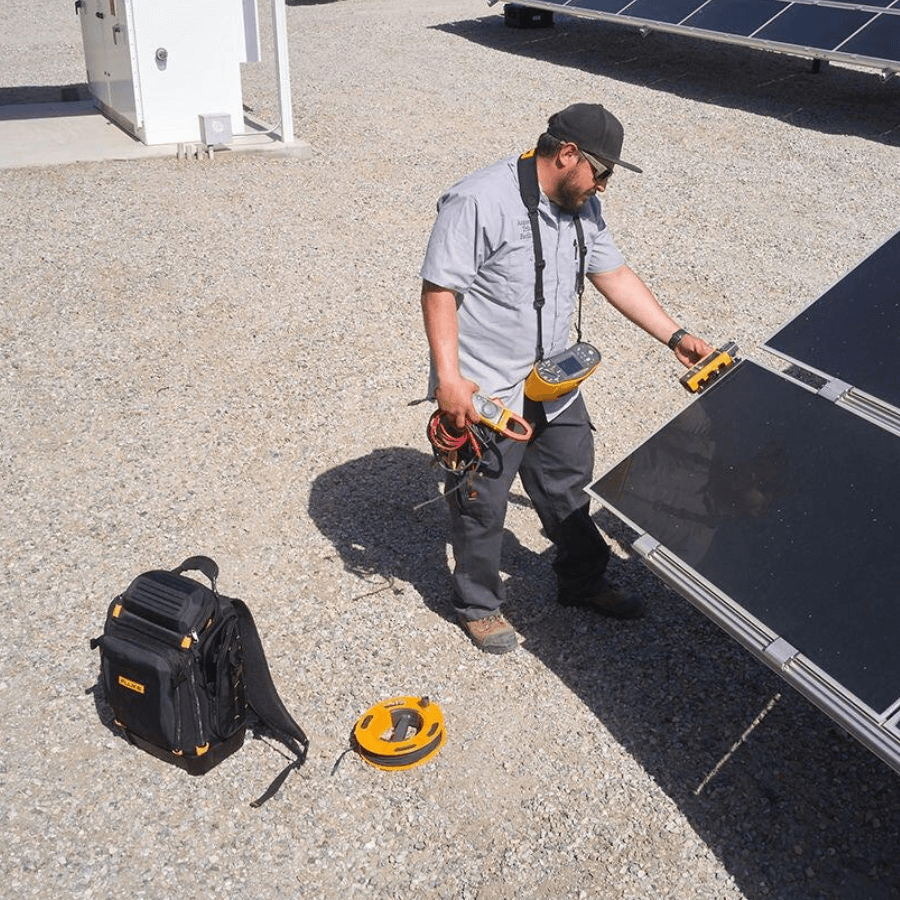
Having the right test equipment is essential for carrying out solar PV testing safely and accurately. While some tools are everyday electrical instruments, others are specifically designed for photovoltaic systems.

As solar installations become more advanced, many installers are moving towards integrated testing solutions that combine multiple functions into a single device. This improves efficiency on site while helping ensure testing procedures remain consistent and compliant.

Multifunction PV Testers

Multifunction PV testers are increasingly becoming the backbone of solar commissioning. Rather than carrying several separate instruments, installers can perform a wide range of electrical and performance tests from a single platform.

These devices are designed specifically for solar applications and can streamline commissioning considerably, particularly on larger or more complex installations.

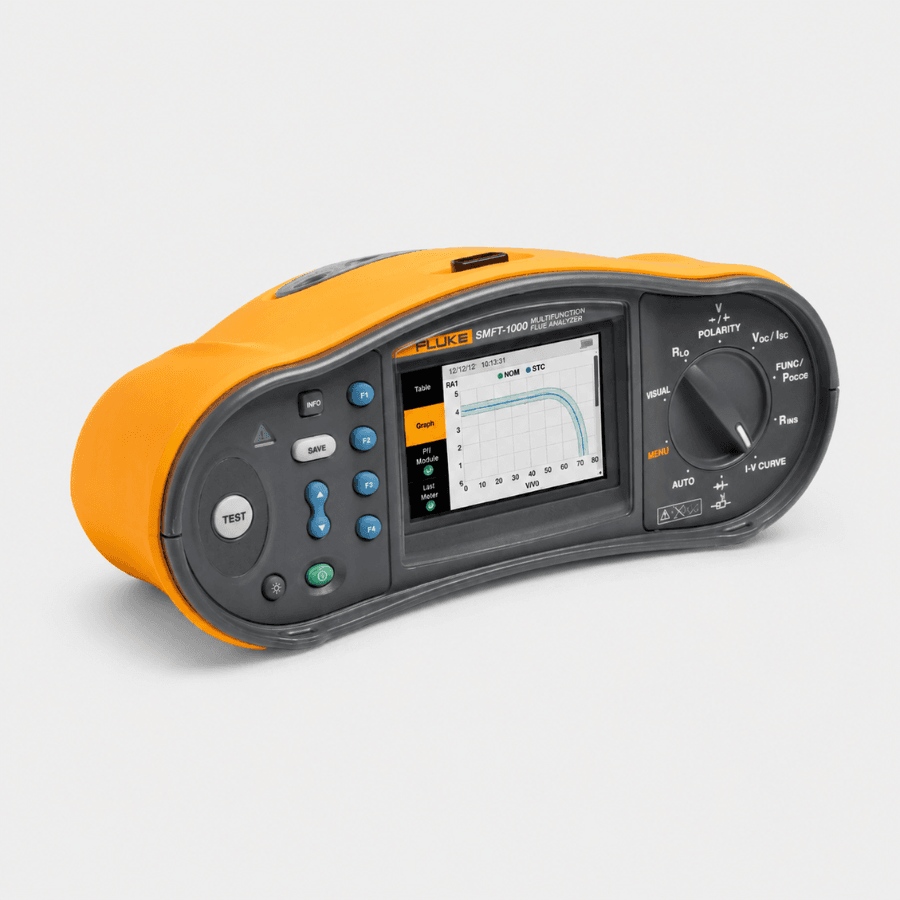
The Fluke SMFT-1000 Solar Multifunction PV Tester is a strong example of this approach, combining insulation resistance testing, I-V curve tracing, irradiance measurement integration, and full PV commissioning capabilities in one unit.

For installers carrying out regular commissioning work, integrated testers can significantly reduce setup time while improving reporting consistency across projects.

Multimeters and Clamp Meters

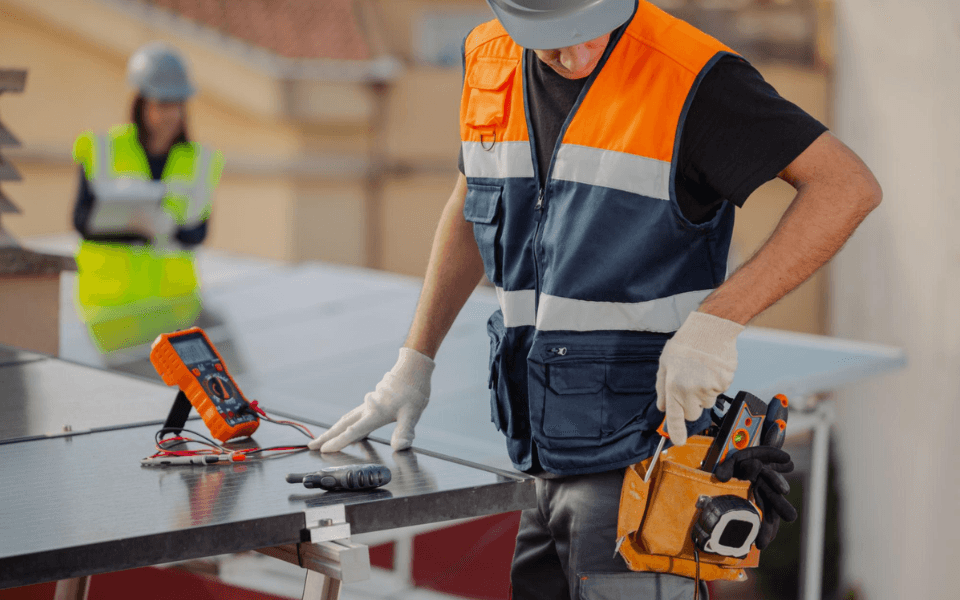
A digital multimeter remains one of the most commonly used tools in solar testing. It allows installers to measure voltage, resistance, and continuity during installation and fault finding.

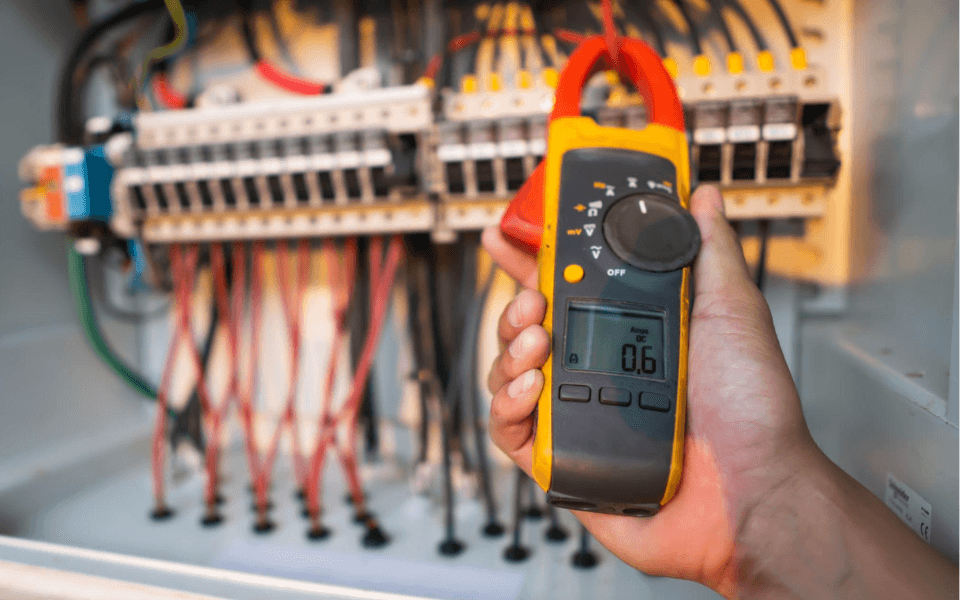
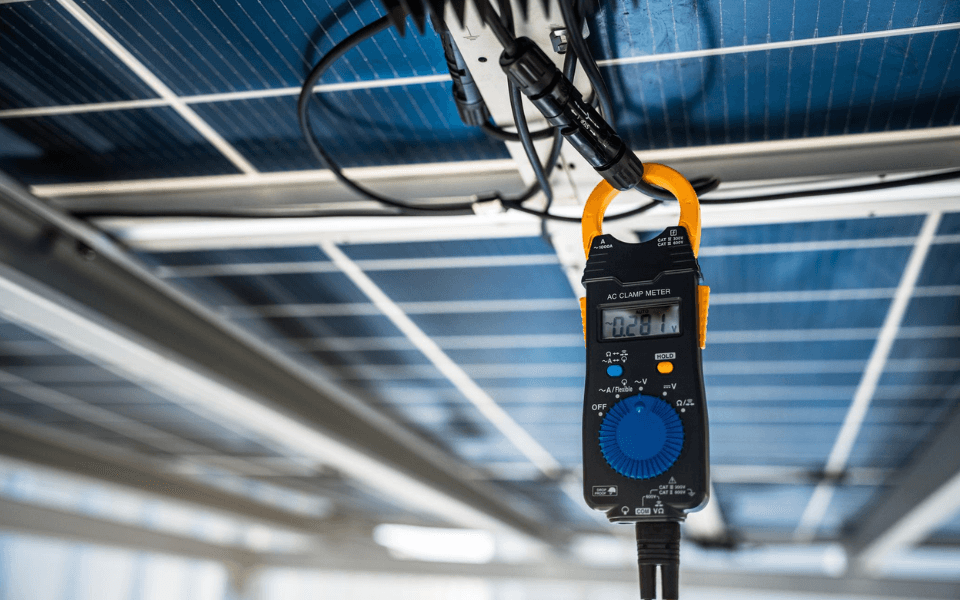
Alongside this, a DC clamp meter enables current measurements without disconnecting conductors, making it safer and more efficient when working on live systems.

These are often the first tools used during both commissioning and maintenance work because of their versatility and portability.

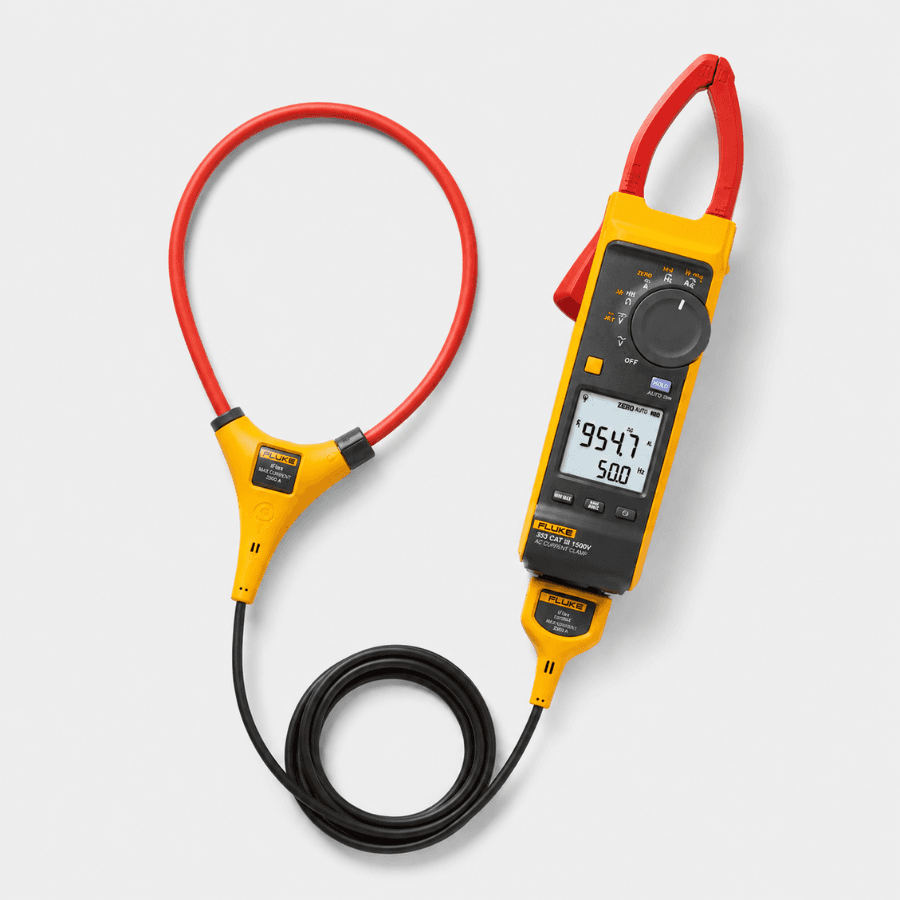
The Fluke 393 FC Solar Clamp Meter is particularly well suited for PV applications thanks to its high-voltage DC capability and solar-specific measurement functions. For installers regularly working on photovoltaic systems, purpose-built clamp meters can make day-to-day testing faster and more reliable.

Insulation Resistance Testers

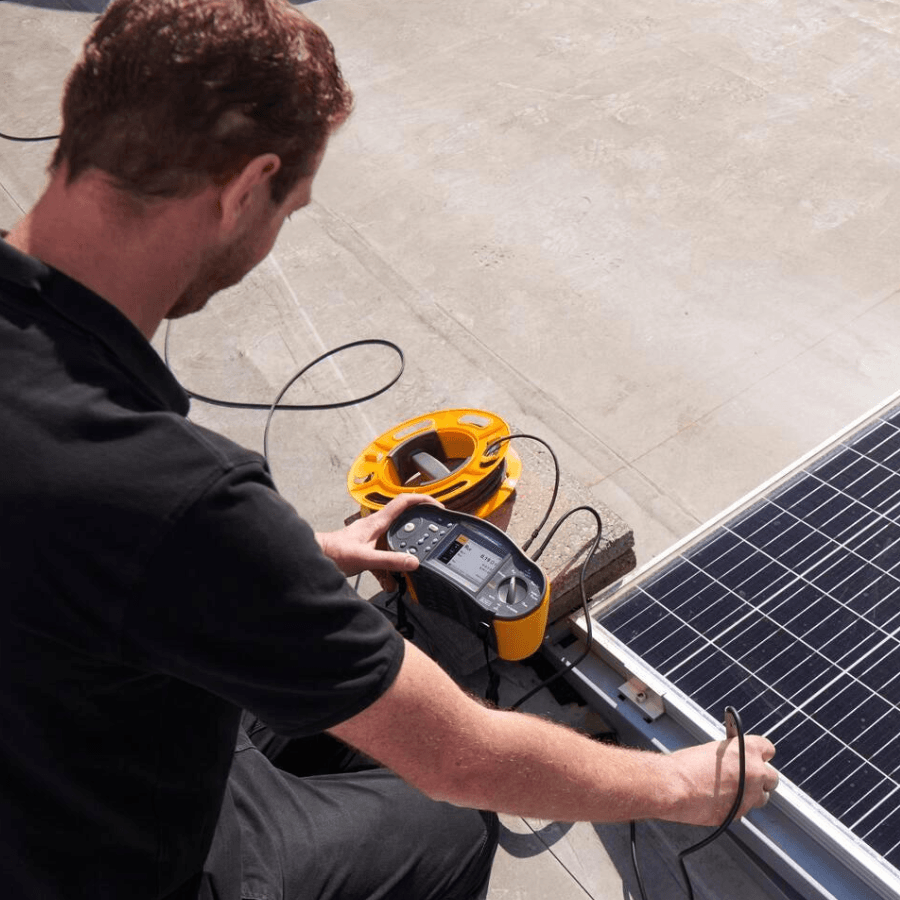
An insulation resistance tester—commonly known as a Megger—is one of the most important pieces of safety equipment in solar PV testing.

This device applies a high DC voltage to verify that cables, connectors, and components are properly insulated. Poor insulation resistance can indicate damaged cabling, moisture ingress, or installation faults that could create safety hazards if energised.

For any installer, this is a non-negotiable part of the testing process. Insulation testing not only supports compliance but also helps identify faults early before they lead to system downtime or costly maintenance issues.

I-V Curve Tracing and Performance Analysis

An I-V curve tracer is used to assess the electrical performance of a PV module or string.

Rather than simply confirming that power is being generated, this tool analyses how the panel performs across different voltage and current conditions. It can help identify:

  • Panel degradation
  • Mismatch losses
  • Shading issues
  • Faulty modules


This makes it particularly useful for troubleshooting and performance verification.

Advanced systems such as the Fluke Solmetric PV Analyzer are designed for more in-depth diagnostics and are often used on commercial and utility-scale projects where detailed performance analysis is required.
Thermal Imaging Cameras

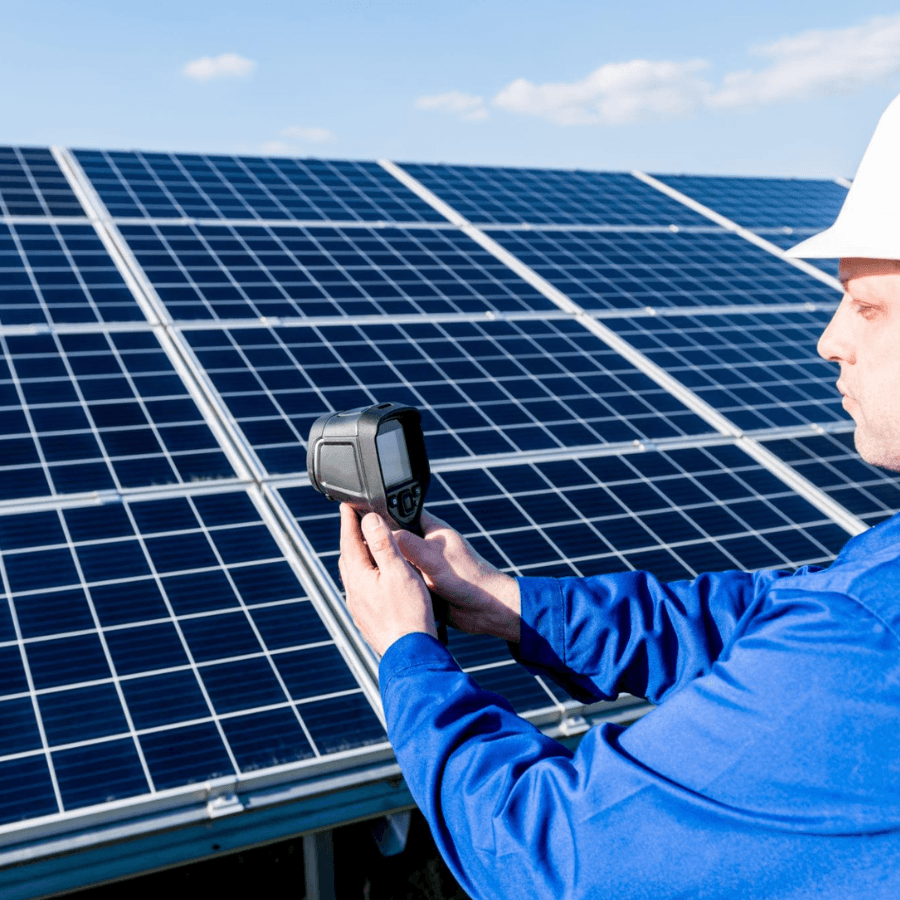
Theral imaging has become increasingly important in solar inspection and maintenance, particularly as PV systems grow in size and complexity.

Infrared cameras allow installers to identify hotspots and abnormal temperature patterns that may not appear during standard electrical tests. These thermal anomalies can reveal loose connections, failing cells, damaged connectors, or overheating components before they develop into more serious faults or system failures.

Unlike traditional testing methods, thermal imaging provides a visual view of system behaviour under operating conditions, making faults easier to identify quickly and non-invasively.

For larger systems especially, thermal imaging provides a fast and highly effective diagnostic method. It is also becoming increasingly valuable during preventative maintenance inspections, helping operators identify developing faults before they impact performance or lead to costly downtime.

Irradiance Meters

Solar output is directly affected by sunlight conditions, which is why irradiance measurement is so important.

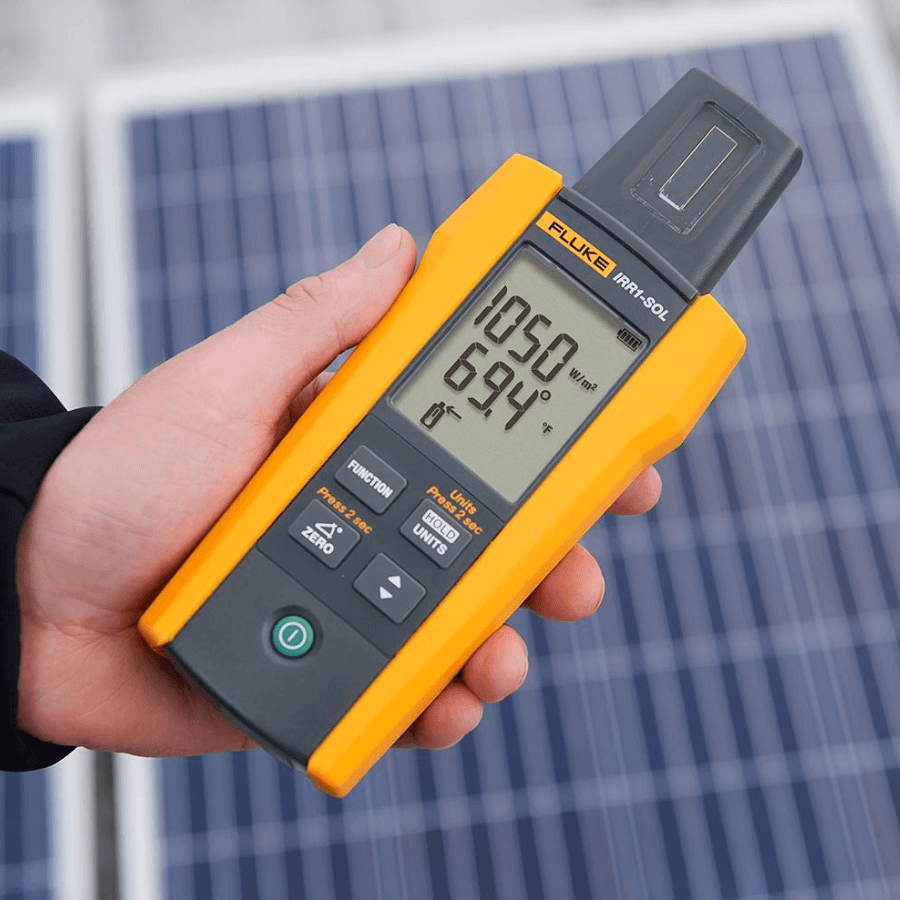
An irradiance meter measures the amount of solar energy reaching the panels at the time of testing. This allows installers to compare actual system output against expected performance under current environmental conditions.

Without irradiance data, performance measurements lack critical context.

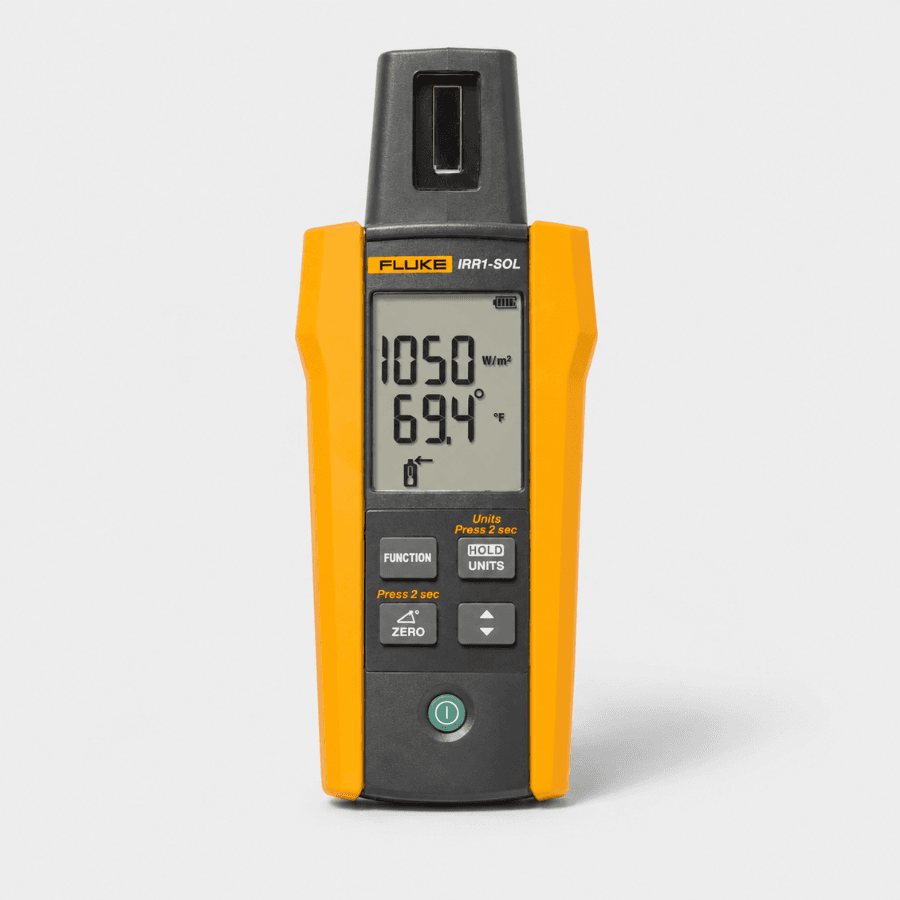
Tools such as the Fluke IRR1-SOL Solar Irradiance Meter help installers capture irradiance, panel temperature, and tilt measurements accurately during commissioning and troubleshooting work.

Kit Options

For many installers, purchasing equipment individually isn’t always the most practical approach. Solar PV testing kits combine several essential instruments into a single package, often including:

  • Multimeters
  • Clamp meters
  • Insulation resistance testers
  • PV-specific test leads and connectors
  • Carry cases and safety accessories


Kit options are particularly useful for installers looking to standardise testing procedures or equip multiple engineers with the same tools.

They can also be more cost-effective than buying equipment separately, especially for newer businesses building out their testing capabilities.

Another advantage of bundled kits is compatibility. Instruments designed specifically for solar PV applications are often supplied with the correct leads, connectors, and safety ratings required for working with high-voltage DC systems. This reduces the likelihood of using unsuitable equipment on site.

When choosing a testing kit, installers should consider the size and complexity of the systems they typically work on. Domestic installations may only require core electrical testing equipment, while larger commercial or industrial systems often benefit from advanced diagnostic tools such as thermal imaging cameras and I-V curve tracers.

Product Highlights: Tools Designed for Solar Installers

Fluke SMFT-1000 Solar PV Multifunction Tester

  • Supports Category 1 and Category 2 PV tests
  • Built to IEC 62446-1 standards
  • Guided testing steps help reduce setup errors
  • Combines multiple testing functions in one unit
  • Designed for fast and efficient field testing


Buy Now >> £3455.00 ex. VAT

Fluke 393FC CAT III 1500V Solar Clamp Meter

  • CAT III 1500V rated for solar PV applications
  • Ideal for solar, wind energy, railways, and data centres
  • IP54-rated body for use in rain and dusty conditions
  • Audio polarity indicator helps identify hazardous miswiring quickly


Buy Now >> £645.00 ex. VAT

Fluke FLK-IRR1-SOL Solar Irradiance Meter

  • Measures irradiance, temperature, inclination, and direction
  • Suitable for roof-mounted and field installations
  • Supports IEC 62446-1 photovoltaic testing standards
  • Provides rapid and accurate solar irradiation measurements


Buy Now >> £316.00 ex. VAT

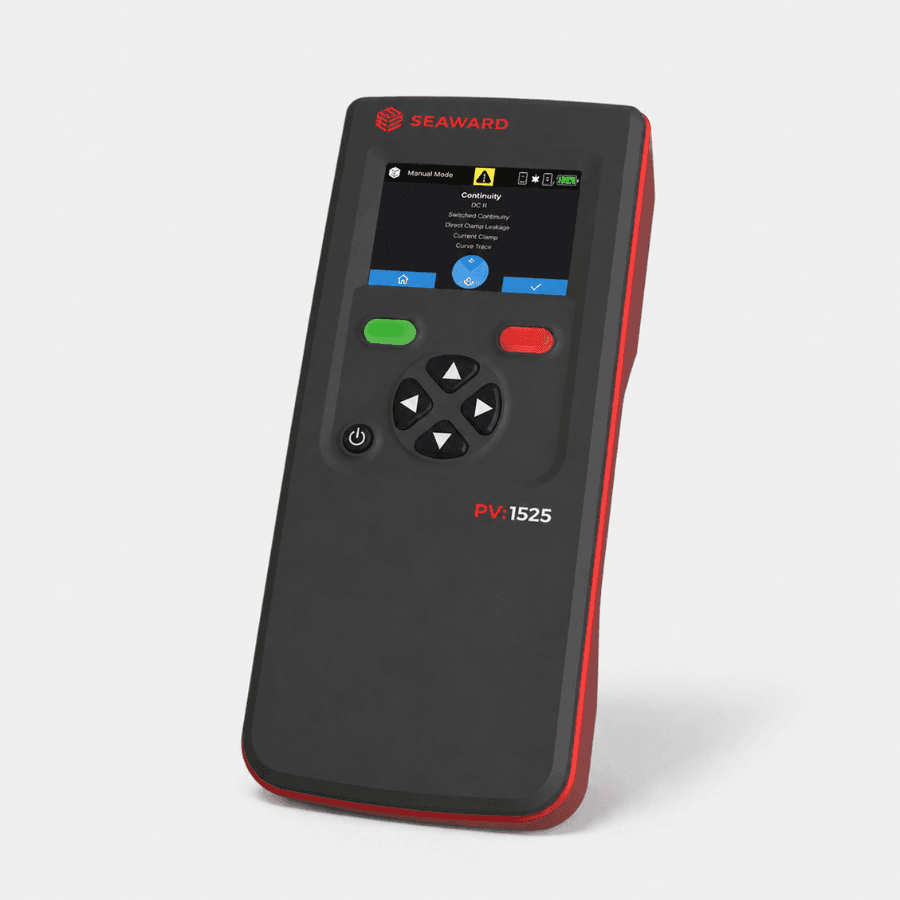
Seaward PV1525 Complete PV Test Kit

  • Complete solution for PV commissioning and maintenance
  • For installers and O&M teams
  • Measures voltage, current, and resistance
  • Supports up to 1500 V DC and 25 A
  • Built-in voltage warning and input protection


Buy Now >> £2390.00 ex. VAT

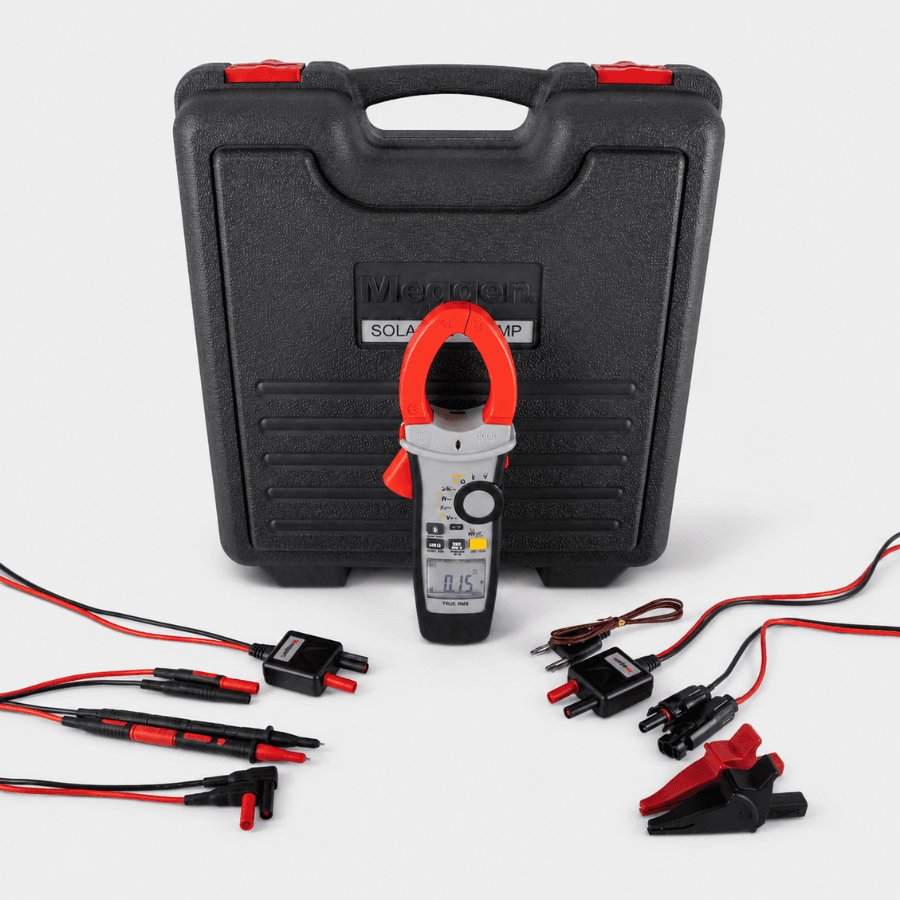
Megger DCM1500S Solar PV Clamp Meter

  • Designed for solar PV and electrical testing applications
  • Measures up to 2000V DC and 1500V AC
  • True RMS technology provides accurate readings
  • Inrush current function detects startup current peaks
  • Non-contact volt detection improves safety during testing


Buy Now >> £365.00 ex. VAT

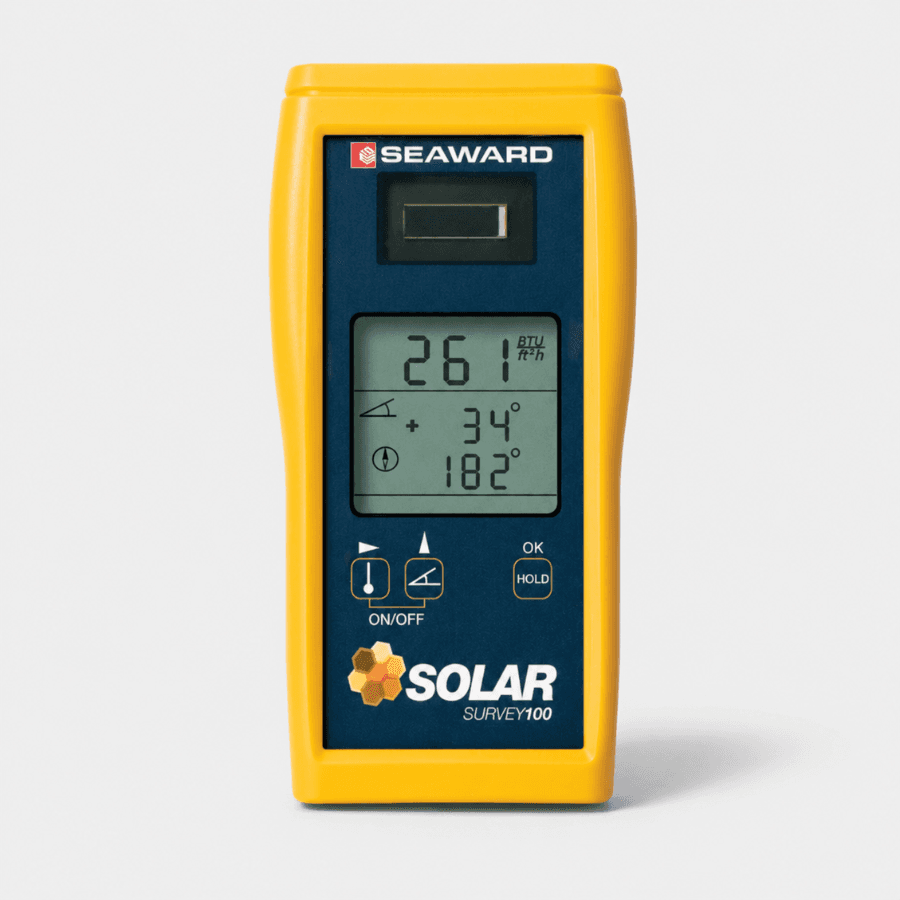
Seaward 396A910 Solar Survey 100R Irradiance Meter

  • Suitable for solar PV and thermal site surveys
  • Uses a photovoltaic reference cell for accurate readings
  • Measures roof pitch, orientation, and temperature
  • Displays readings in W/m² or BTU/hr-ft²
  • Rugged 5-in-1 meter for field use


Buy Now >> £166.00 ex. VAT

Choosing the right solar testing equipment depends on the type of systems you work on and the level of testing required. From everyday electrical verification through to advanced PV performance analysis, Fluke offers a range of tools designed for different stages of installation, commissioning, and maintenance.

The comparison below highlights some of the most popular Fluke solar testing solutions and where they are best suited.

Best forEntry-level testing kitsFluke 393 FC Solar Clamp MeterFluke SMFT-1000 Solar Multifunction PV TesterFluke Solmetric PV Analyzer
Everyday electrical testingExcellentExcellentExcellentGood
PV commissioningGoodModerateExcellentExcellent
I-V curve tracingYesAdvanced
Utility-scale diagnosticsLimitedModerateStrongExcellent
PortabilityHighHighMediumMedium
Ideal userDomestic installersSolar electriciansPV commissioning engineersUtility-scale specialists

Final Thoughts

Solar PV testing is one of the most important stages of any installation. It confirms that a system is safe, compliant, and capable of performing as intended.

From basic multimeters through to advanced thermal imaging and I-V curve tracing, every piece of equipment plays a role in building a complete picture of system health.

For installers, investing in proper testing equipment isn’t simply about meeting regulations—it’s about delivering higher-quality installations, reducing future faults, and building trust with customers.

As solar technology continues to evolve, testing requirements are also becoming more sophisticated. Installers are increasingly expected to provide not only safe installations, but also detailed commissioning data and long-term performance assurance.

Having the right tools—and knowing how to use them correctly—helps ensure systems continue to operate efficiently long after installation is complete.